Richard Price founded Academia.edu in 2008 to make academic research easier to share and read.

In 2020, the company wanted to add video without building and maintaining its own encoding, storage, delivery, and playback stack. Niko Rutherford, then Associate Director of Engineering, led the work.
"My main goal in assembling a proper solution was building as little as possible."

How Academia added video
Skiv handled uploading, encoding, storage, playback, and publishing. Academia could add video to its product without owning that infrastructure.
"Skiv allowed us to add video to our site in a matter of weeks rather than the 2-3 month plan we originally had. We have now scaled to over 20k videos on Skiv without having to do any maintenance on our end."
"Factoring in engineering time using Skiv has easily saved us over $100k while being a delight to use."
Academia uses the API to upload videos, the embedded player to show them, and automatic transcripts to make the content searchable.
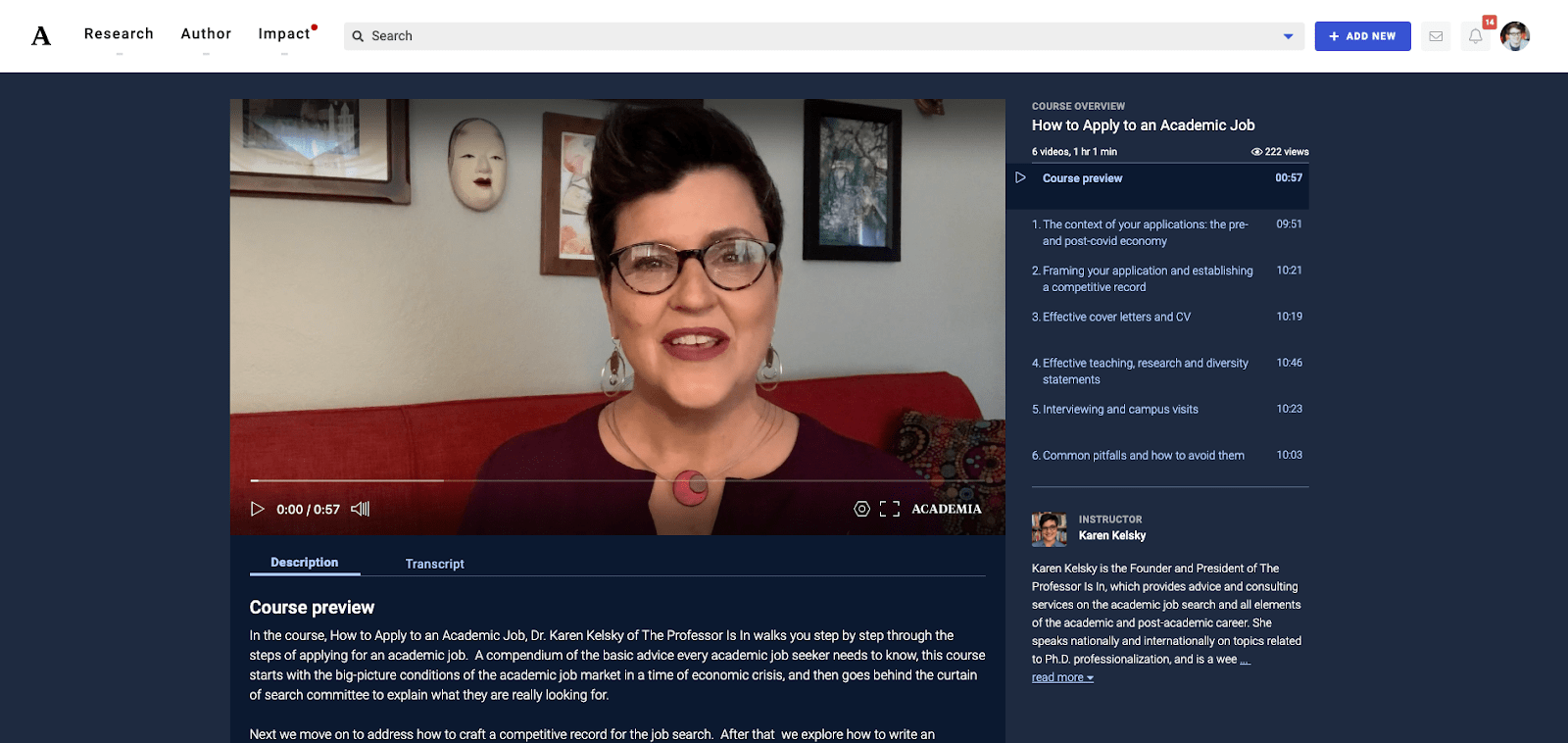
"We use their API to upload content, their embedded player to display that content to users as well as their transcriptions to integrate into our search."
Features Academia uses
Niko Rutherford's advice is simple: "Use the API, it is great."
According to Rutherford, Academia launched weeks earlier than its original plan and grew its library past 20,000 videos without maintaining a separate video stack.
Get started (it's free)